Saving Can-Do.
Americans increasingly feel like rats in a maze. Do this. Don’t say that. Did you comply with the rules? Is your paperwork in order? Can you fill out more and more of it for no discernible reason?
Governing systems were remade after the 1960s to replace human judgement (and authority) with a kind of legal software program. The origin story displays the best of motives--to preclude any more abuses such as racism and pollution. Because humans can make poor judgments, the theory went, it’s better to strain choices through a legal sieve of prescriptive rules, processes, and rights.
But it doesn’t work. Instead of enhancing freedom, law replaced freedom. Americans no longer feel free to do what they think is right or sensible. Doctors and nurses spend half the day filling out forms, teachers have lost control of the classroom, and employers no longer give job references or candid reviews.
Read More
Use Your Judgment
I have a new book, out this week, Saving Can-Do: How to Revive the Spirit of America. One reason America is fraying, I argue, is because of a root flaw in post-1960s law: the idea that law should make or validate correct choices. Law is everywhere—in thick rulebooks, years-long procedures, self-interested people pounding the table for their alleged rights ….
America’s energy comes from individual ownership of choices and values—not tiptoeing through the day with a little lawyer on our shoulders. The proper role of law is to define the scope of free choice by setting outer boundaries—no crime, no pollution, and so forth—not by extruding daily choices through the eye of a legal needle. Law is supposed to protect freedom, not replace freedom.
Read More
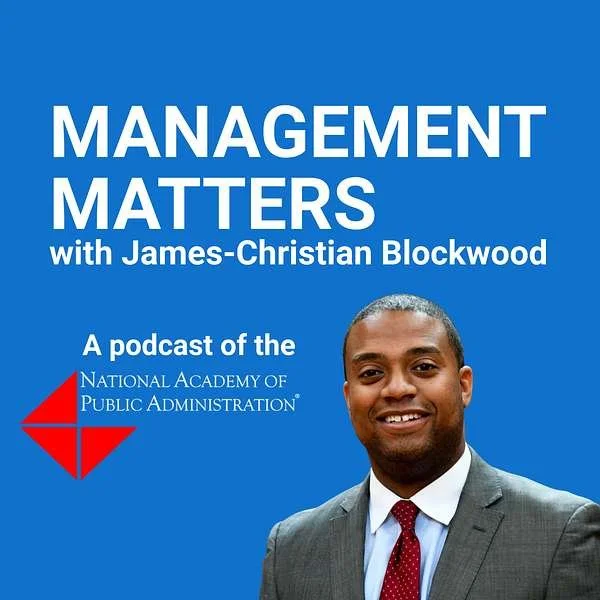
Management Matters Podcast: Reimagining Government
We may be in an incredibly important moment for reimagining and reinventing what government can be. On this episode of Management Matters with James-Christian Blockwood, we talk to Philip Howard, Founder and Chair of Common Good, about some of the possibilities of this consequential moment for government.
Read More
The Flaw of Post-1960s Liberalism
American exceptionalism is rooted in individual initiative. Americans have a cultural belief in self-determination. America is the place where people can make the best of themselves.
Over the past few decades, America’s can-do culture has been corroded by a sense of futility. The failures are clearly visible in institutional ineptitude—say, the inability to modernize infrastructure or to fix poor schools. But the cultural rot is more pernicious. Americans no longer believe we can make a difference, or build a better future. We feel disempowered. Watch what you say. Just follow the rules. Instead of striding towards our goals, Americans increasingly feel like rats in a maze. Many turn to MAGA.
Read More
Breakneck versus Paralysis?
China’s autocratic society comes to life in Breakneck, the new book by Dan Wang. Nothing gets in the way of public works. Subways go through buildings. High-speed rail lines are built seemingly overnight. Industrial dominance in solar panels and electric cars is the result of deliberate policy.
Breakage is common. Top-down mandates can’t adapt to unforeseen circumstances and market realities. Cities of apartment buildings remain empty. One provincial czar had a kind of genius for idiotic mega-projects, including a giant ski resort in a place without snow.
What’s most breathtaking, to me, is the state’s intrusion into personal lives.
Read More
The Missing Vision
Maybe it’s me, but the news cycle seems both terrifying and tedious. We’re treated to a steady diet of crises followed by reactions which create new crises. It’s as if we’re in a straitjacket, bouncing off today’s emergency instead of making deliberate choices that might lead to a coherent future.
In a thoughtful New York Times column, Ben Rhodes explains how “short-term compulsions blind us to the forces remaking our lives.” He characterizes Trump as seeking “short-term ‘wins’ at the expense of the future”—for example, ignoring unsustainable national debt, climate change, and other existential perils. But Rhodes says Democrats too are trapped in short-termism—“spend[ing] more time defending what is being lost than imagining what will take its place.”
Read More
Code Red
Politics now has a dizzying quality. The roller-coaster of Trump policies―now we do this, now we do the opposite―is being matched by wild swings in the Democratic positions, led by socialist Zohran Mamdani's victory in the New York City mayoral primary. Just imagine, as liberal columnist Joe Klein mused, the staggering inefficiency of a municipal grocery store operating under union work rules: "Sorry, I only restock on Thursdays."
Centrist democrats are trying to mobilize an Abundance agenda to cut through red tape to build housing and infrastructure. That's a step in the right direction, but pruning the red tape jungle doesn't work by itself. Officials must have authority to make tradeoff judgments.
Read More
The Aaron Renn Show: Why America Can't Build Anymore
Aaron Renn sits down with Philip Howard to discuss the crippling bureaucratic red tape stifling America’s ability to build and innovate. From the New Deal’s rapid achievements to today’s endless legal labyrinths, Howard proposes a bold solution: a framework rooted in human responsibility and accountability to restore America’s can-do spirit.
Read More
America Trends Podcast: DOGE May Be Giving Necessary Reform a Bad Name
DOGE seems hellbent on taking an indiscriminate chainsaw to the government itself instead of pruning and cutting back in strategic ways. Philip Howard talks with Larry Rifkin about what needs to be done to enhance the performance of government and hold political leaders to account.
Read More
End Infrastructure Paralysis: Philip K. Howard Calls for New Framework to Modernize U.S. Infrastructure
At the start of Infrastructure Week, Common Good Chair Philip K. Howard called today for the United States to end its infrastructure paralysis by adopting a new framework to modernize U.S. infrastructure. This framework would replace balkanized approvals by multiple agencies and multiple levels of government with one decision-making hierarchy.
Read More
It's in the Air
The world today feels like a rowboat in a storm, with leaders directing their powers towards destruction and disruption. There's no line of sight towards a strong and stable American government.
There's growing consensus, however, that paralytic bureaucracy must be replaced. But replaced with what? DOGE is swinging its wrecking ball without a new governing vision. Democrats seem almost catatonic, calling weakly for more government instead of effective government.
Read More
The Day After DOGE
So far Elon Musk's DOGE initiative has focused on cutting programs and terminating civil servants, not reforms to improve public performance. But there's broad public and expert opinion that government operating systems are overdue for overhaul.
This forum will focus on the operational failures of the current state, and will include proposals to empower common sense solutions, make government more manageable, and clarify the role of oversight by courts.
Read More
Forum: The Day After DOGE
So far the Trump administration’s DOGE initiative has focused on cutting programs and terminating civil servants, not reforms to improve public performance. But there's broad public and expert opinion that government operating systems are overdue for overhaul.
This forum focused on the operational failures of the current state, and included proposals to empower common sense solutions, make government more manageable, and clarify the role of oversight by courts.
Read More
3 Takeaways Podcast: Why Bad Cops Stay and Schools Fail
Philip Howard talks with Lynn Thoman about how public employee unions have a grip on the operating machinery of government, and how to restore accountability and honor to public service.
Read More
Federal Drive with Tom Temin: Not Only What Government Does, But How It Does It
Philip Howard talks with Tom Temin about DOGE, and the need to rethink how the government does what it does.
Read More
A Philosophy Problem
America is bogged down in red tape. This is not a secret. Common sense is nowhere, because common sense is illegal.
A brigade of worthy new books is sounding the alarm, and are summarized by David Brooks in his column this week: “We Can Achieve Great Things.” Other public intellectuals calling for a better way of governing are IT expert Jennifer Pahlka, law professor Nicholas Bagley, and political scientist Francis Fukuyama.
What's missing is a discussion of the philosophical flaw underlying the modern state.
Read More
Good Government Begins with Accountability
Yes, the bureaucracy in Washington is a clogged-up tangle. That’s why two-thirds of Americans think it needs a major overhaul.
But slashing away at Washington’s many stupidities won’t fix much — like trying to prune a jungle. The way to drain the swamp is to pull the plug on its flawed operating philosophy — the post-1960s red tape compliance model. Americans are swimming in red tape. Is your paperwork in order?
Read More
Firing Line with Margaret Hoover: Philip K. Howard and Will Marshall
Philip Howard and Will Marshall of the Progressive Policy Institute talk with Margaret Hoover about President Trump's deep state blitz, what DOGE is getting wrong, and their advice for Elon Musk in a forum at Hofstra University.
Read More
John Ketcham: A Fix for America’s Infrastructure Paralysis
In recent weeks, Elon Musk’s Department of Government Efficiency (DOGE) has moved to eliminate the U.S. Agency for International Development, while President Trump prepared an executive order to wind down the U.S. Department of Education. It’s the latest attempt to make government more efficient by eliminating things that it does. Merely shuttering departments, however, won’t get to the heart of the problem DOGE seeks to correct: The American public sector, at any level of government, can’t get things done in a time-effective and efficient manner.
A new Manhattan Institute report provides an antidote to this public malaise in the context of infrastructure. Its author, Philip K. Howard, offers a new governing vision that authorizes officials to weigh tradeoffs and make decisions for the public’s benefit.
Read More
A Revolutionary Moment
Disruption can be good or bad. Or both. Courts will decide how far the new administration can go. At Common Good, our focus is to try to ride in front of the DOGE stampede and turn it towards new visions of how to fix endemic public failures.
Tearing down the status quo is not enough, and will have unintended consequences. America needs a new governing philosophy. Here are two big opportunities for new operating structures.
Read More