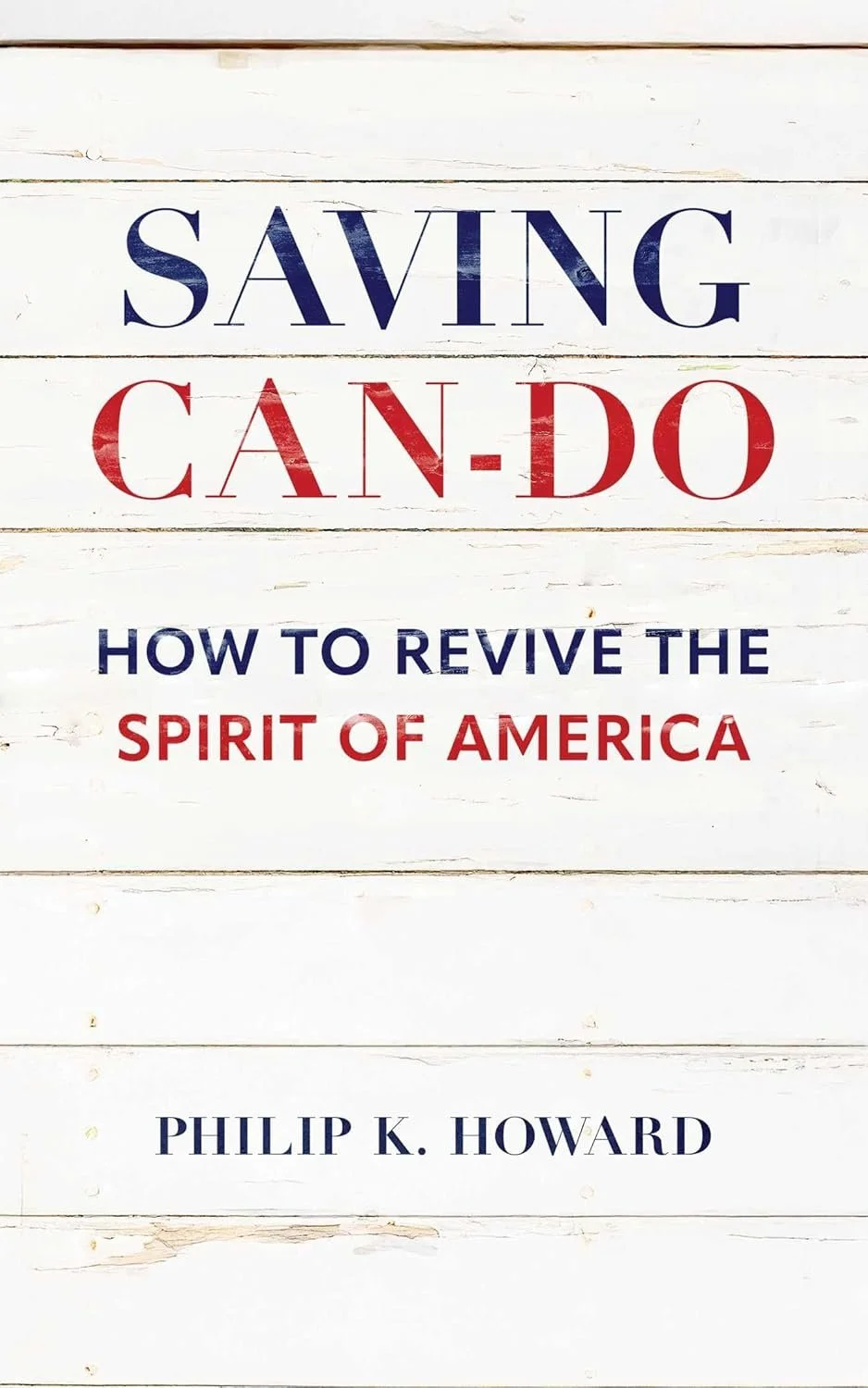
In Saving Can-Do, Common Good Chair Philip K. Howard unlocks the quandary of populist resentment and also of broken government.
America is flailing in legal quicksand. The solution is a new governing framework that allows Americans to roll up their sleeves and take responsibility. We must scrap the red tape state. What’s required is a multi-year effort to replace these massive failed bureaucracies with simpler codes that are activated by people using their judgment. As America approaches the 250th anniversary of the revolution, it’s time to reclaim the magic of America’s unique can-do culture.
Saving Can-Do was published by Rodin Books on September 23, 2025.
Growth and innovation are back in fashion. This year’s Nobel Memorial Prize in economics, awarded to three leading scholars of “creative destruction,” makes it official. No less notably, in the US, the post-neoliberal center-left has lately adopted the neoliberal preference for deregulation in pursuit of progress. Abundance is all the rage.
Philip Howard must be pleased, if a little bewildered. For decades, in a series of excellent and widely praised books, he’s been explaining how a crazy excess of rules and litigation chokes growth. Policymakers have all but ignored him. His latest, Saving Can-Do, takes up the cause yet again. It’s very good: short, to the point and suddenly in tune with the times.
Read MoreAs our nation faces a profound moment of political disruption, neither party is offering a vision to overhaul America’s broken governance. In Saving Can-Do, Philip Howard offers a bold and simple governing vision: Replace red tape with responsibility and let Americans hold each other accountable.
At this book event, Philip, AEI’s Philip Wallach, and The Washington Post’s George Will discuss how scrapping the red-tape state can enable America to reclaim the power of its unique can-do culture.
Read MoreFormer Speaker Newt Gingrich talks with Philip Howard about his new book, ‘Saving Can-Do.’ Philip discusses the pervasive issue of bureaucratic red tape that has stifled common sense and effective governance since the 1960s. He argues that the legal system has become overly complex, with 150 million words in federal law and regulation, compared to the 7,500 words of the U.S. Constitution. Philip advocates for a multi-year effort to replace these cumbersome bureaucracies with simpler codes that empower individuals to use their judgment.
Read MoreMaybe it’s me, but the news cycle seems both terrifying and tedious. We’re treated to a steady diet of crises followed by reactions which create new crises. It’s as if we’re in a straitjacket, bouncing off today’s emergency instead of making deliberate choices that might lead to a coherent future.
In a thoughtful New York Times column, Ben Rhodes explains how “short-term compulsions blind us to the forces remaking our lives.” He characterizes Trump as seeking “short-term ‘wins’ at the expense of the future”—for example, ignoring unsustainable national debt, climate change, and other existential perils. But Rhodes says Democrats too are trapped in short-termism—“spend[ing] more time defending what is being lost than imagining what will take its place.”